Homelessness

A fresh approach

pavement45cover

(The Pavement, 1 October 2009) You might have walked past an Emmaus shop and wondered what lay behind the pale green sign with the emblem of a dove holding a flower. It may look and sound like a religious organisation, but Emmaus is a secular charity with a simple aim: to “give homeless people a bed… and a reason to get out of it”.

While most homeless charities focus on one need – be it providing jobs, housing or food – Emmaus offers all three. Its members (known as ‘companions’) live, work and eat together in small, self-sufficient communities. There are 19 groups in the UK, everywhere from Glasgow to Brighton, plus branches in 36 countries around the world.

The pioneering charity was founded 60 years ago in Paris by Father Henri-Antoine Groues, better known as Abb?© Pierre – a Catholic priest, MP and former member of the French Resistance. One night, he was introduced to a homeless man named Georges who had tried to commit suicide in the river Seine after being released from prison after 20 years, only to find his family could not cope with his return. Abbé Pierre asked Georges to help him, and together they set about building temporary homes, initially in é Pierre’s own garden, for people living on the streets of Paris. Later, Georges said: “Whatever else he might have given me – money, home, somewhere to work – I’d still have tried to kill myself again. What I was missing, and what he offered, was something to live for”.

As more companions joined, they decided to raise money by becoming “rag pickers”, collecting and selling things people no longer wanted. The same principle is used today, with Emmaus shops selling second-hand items donated by the local community. As well as providing a constant source of funds, this has gained new significance as the ‘reduce, reuse, recycle’ mantra gathers pace.

In the last issue of The Pavement, we published a letter from the new general manager of Emmaus South Lambeth (ESL), James Hayes, in which he told readers about the spaces up for grabs at ESL. Despite some high-profile supporters (Terry Waite is the Emmaus UK president, and ESL alone has been visited by celebrity chef Antonio Carluccio, Joanna Lumley, Jerry Hall and MOBO award-winner YolanDa Brown), Emmaus is still relatively unknown. This means that although it has 25 en-suite rooms, ESL currently has (at time of going to press) just 18 companions – 15 men and three women, with an age range of 23 to 63. However, it’s unlikely the rooms will stay empty for long – and just as well, since ESL will need plenty of help when its new furniture and electrical superstore opens this month.

Construction of the Beadman Street store, part funded by the Emmaus UK Federation Office with a small donation from Lambeth Council, has cost £753,000. It is a sizeable chunk of money, but it is hoped that the new addition will bring fresh opportunities for the companions.

The electrical shop currently squeezes in a selection of giant TVs, small electrical appliances and – somewhat bizarrely – a motorised scooter. The new store will allow space for larger white goods, such as washing machines and dishwashers. One level of the two-storey development has been earmarked for use as a workshop, where companions will be able to do furniture restoration and PAT Testing on electricals.

Like many workplaces, a typical day at ESL begins with a staff meeting. Ideas are shared, grievances aired and jobs allocated, before everyone heads off to their respective posts. As a new arrival to ESL, James was impressed with the enthusiasm of the companions: “they’ve got strong points of view; they really care and have so much passion.”

As well as frontline work in the furniture superstore and bric-a-brac and electrical shops, the companions have plenty of behind-the-scenes work to do. Furniture donations have to be collected and purchases delivered, while all new stock must be sorted, cleaned and priced. Electrical items are also safety checked by one of the four companions trained in PAT testing.

Over in the kitchen, the chefs prepare three square meals each day for their fellow companions, using ingredients grown on ESL’s own allotment when they can. And at 5pm, after a hard day’s work, the group gather at the large wooden tables for dinner before spending the evening as they please, whether that’s at the local gym, watching TV in their room or relaxing in the comfortable communal room, with its separate TV, board game and computer areas.

The few house rules include no drugs or alcohol, no pets and no smoking in common areas. Although companions do not sign on while working with Emmaus, they continue to collect housing benefit, which goes towards funding the shops. As well as full board, companions receive a weekly allowance of £33 and a one-week holiday every three months, plus £100 and £50 for travel. An additional £5 per week is saved on behalf of each companion so that by the time they decide to move on, they have a tidy sum saved up.

There’s no time limit on how long companions can stay. “Some see it as a temporary measure to keep their CV up to date,” says James. “Others see Emmaus as their way of life and might stay five, 10 even 20 years”. The companions gain confidence, experience and skills on the job. In addition, they can attend workshops and courses in everything from food hygiene to computing and carpentry at Lambeth College. Many also bring skills from previous employment or life experience, which – combined with the help of ESL’s dedicated volunteers – makes for a rich talent pool.

Personal support is provided by a counsellor who comes once a week and a monthly support plan gives companions a chance to raise any issues, get advice and plan their next step. Additional support and guidance is provided by the two deputy community leaders, plus the four ESL companions have taken on extra responsibilities as ‚Äòcompanion assistants’.

And the inspiring principles of Abb?© Pierre remain at the heart of everything Emmaus does: acceptance, sharing, working for others in greater need and self-respect. Like Georges, companions today recognise that a reason to live is the best thing anyone can give you. ESL is holding a benefit gig at the Windmill in Brixton on 17th October, entry ¬£5.

http://www.thepavement.org.uk/story.php?story=817

Homelessness

Shelter report: shocking claims on gatekeeping

cover-29

(The Pavement, 25 September 2009) Local authorities are encouraging hostels to dissuade applications and not to document rejections for temporary housing in a practise known within the industry as ‘gatekeeping’, a leaked document sent to this magazine has revealed.

The report claims gatekeeping not only “prevents people from exercising their legal rights and denies them the opportunity to resolve their homelessness”but also distorts official statistics. “If no application is taken, then there is no record of the household having approached the local authority,”the report said. The law states that local authorities have an obligation to take a homeless application from anyone they believe may be homeless or threatened with homelessness, and that they are under a duty to accommodate while they make inquiries. It also says a formal written decision, which carries with it a right of review, must be written.

However, the report, which originated from Shelter, highlights a number of cases where local authorities had prevented or actively discouraged people from applying as homeless. One way of discouraging applications was to insist on excessive amounts of documentation before providing assistance. The report cites research which found in 2005 that “initial filtering procedures”were deterring young people from making a complete application or giving full information. People had complained of waiting for up to a day to receive an interview, or simply being given information leaflets rather than speaking to someone. They were also asked to produce difficult to obtain written information, such letters from were they had been staying previously to prove they could no longer live there.

Shelter’s report highlighted 50 cases from across the country. Requests were even made of those who had suffered domestic violence or relationship breakdown, with one woman fleeing violence being told she was intentionally homeless because she had not reported the violence to the police. Refusing applications on the basis of a lack of “local connection”was another practise found, despite the local authorities having a legal obligation to assist before any referral can be made to another area; other vulnerable would-be applicants were found to have been placed on a general housing waiting list.

Many applicants were given on-the-spot verbal decisions that they did not qualify, making challenging the decision harder. This is not the first time gatekeeping has come to public attention. In 2005, a survey for Shelter’s national magazine Roof found that 63 per cent of council staff, out of 60 local authorities contacted, felt pressured to bend the rules to reduce the numbers of people they accepted as homeless. The Office of the Deputy Prime Minister was at the time reported as responding: “Suggestions that this is about avoiding helping people are completely wrong…We have not seen any substantial evidence that this is happening and reject findings of this survey.” However, in 2006, the then Minister for Housing and Planning, Yvette Cooper, wrote an open letter to local authorities advising against the practise, saying that: “I do want to see continued reductions in homelessness numbers, but that must be achieved through more effective help, not as a result of a ‘gatekeeping’ approach…It is critical that vulnerable households should not be denied the assistance they need.”

Despite having been written in September 2005, the Shelter report remains unpublished over two years later. A spokesperson for the charity told The Pavement: “The document… was intended for internal use rather than publication. We have various reports, which are more of a collation of information passed to us in the communications, policy and campaigns department from people in our services reporting trends or problems so we can decide on the best way to try and solve them.” However, in a letter accompanying the report sent to The Pavement, an anonymous employee suggested Shelter’s response has been purposely “low profile.” The covering letter also added: “These practices, as the report evidences, are not isolated but endemic and nothing less than an abuse of some of the most vulnerable groups in our society… This is the territory where Shelter should be taking central and local government head on.”

Shelter’s chief executive Adam Sampson said: “Where it is apparent that gatekeeping is taking place, Shelter is working with the government and with local authorities both publicly and behind the scenes to tackle the problem and ensure homeless people have access to the help they need. “Shelter’s policy and campaigning work is not influenced or compromised by government contracts.”

http://www.thepavement.org.uk/story.php?story=373

London culture

The Black Album (review)

The-Black-Album1

(Visit London, 26 July 2009) It’s not often that you find religious radicalism, comedy and the artist formerly known as Prince in the same sentence – let alone the same play. But award-winning author Hanif Kureishi has managed it in The Black Album.

The new production is Kureishi’s stage adaptation of his own novel, also called The Black Album, which takes its name from Prince’s unreleased but widely bootlegged album of 1987.

The music theme continues with a energetic soundtrack from Sister Bliss from Faithless. Who better to do the music for a play about religion than a member of the group who once sang God Is A DJ? The mix of 80s classics had me tapping my feet as soon as I entered the National Theatre.

The scene is set 20 years ago in 1989 – the year that a fatwa was issued against Salman Rushdie for his controversial book The Satanic Verses.  The play explorers the religious tensions of the era, the repercussions of which are still felt today, through Shahid Hasan (played with energy by Jonathan Bonnici), a young Asian boy leaving leafy Sevenoaks to study in the bright lights of London.

The Black Album deals with some pretty heavy issues: religious fanatism, drugs, racial identity, sex and violence, yet at times it felt more like a comedy sitcom. Family dramas were peppered with comic insights into Pakistani domestic life, Shahid’s brother Chili (Robert Mountford) was like a flamboyant Boycie from Only Fools And Horses, and there was even a starring role from an aubergine pakora!

Like the multi-named, cross-dressing Prince, the characters each juggle different identities. Watching the play, the hardest part was not deciding who to believe, but trying to figure out what they believed.

I’m off to the upcoming talk on 10 August with Hanif Kurieshi and the play’s director Jatinder Verma in search of enlightenment!

http://blog.visitlondon.com/2009/07/the-black-album-at-the-national-theatre/

London culture

Walking In My Mind (review)

kusuma_dots_obsession_539
Yayoi Kusuma, Dots Obsession 2004, © Yayoi Kusama 2009, Photo: Yayoi Kusama Studio


(Visit London, 22 June 2009). The Hayward Gallery has gone all John Malkovich on us with their surreal, new exhibition Walking In My Mind. Through a series of giant works and sculptures, ten artists invite us to enter their imaginations.

The exhibition begins before you even step foot inside the Hayward. Along the sunny Southbank, 24 trees have been wrapped in red spotted fabric. It’s the brainwave of iconic Japanese artist Yayoi Kusama – a life-long dot-obsessive, according to a recent interview in The Guardian.

Of course, all art is about stepping into the artist’s imagination, but in Walking In My Mind it is a much more physical, adventurous experience. It was also darker, funnier and more bizarre than I expected.

Scottish-born artist Charles Avery had me chuckling out loud with his inventive project The Islanders. As well as sketches of life on his imaginary island, Avery displays his ’souvenirs’, including Stone-mice (part rodent, part mineral), which look suspiciously like normal stones, and a Bejewelled Hare – stuffed and brandishing its bling like a hip-hop superstar.

Thomas Hirschhorn’s Cavemanman was even more surreal. His uneven maze of tiny caves and tunnels, made of cardboard and plastered in brown parcel tape, was like something out of a postman’s nightmare.

But there was a darker side to the exhibition too. Walking through Chiharu Shoita’s After The Dream was quite unsettling. The painstakingly woven web of wool – Shoita told me it took a week to complete – felt like a swarm of bats that could get caught in your hair any second.

Yayoi Kusama’s new work, Dots Obsession, has become the ’face’ of the exhibition so I was eager to see this. For me, the red spotted shapes worked best on the Southbank and on the bright, green Astroturf of the Hayward’s sculpture terrace, where they looked vibrant and delightfully out of place.

One of the curators Mami Kataoka pointed out that while a doctor can visually see the brain, the mind itself has no boundaries – there is no shape. This sense of freedom in self-expression has produced an exhibition that really does blow your mind.

Inspired by the exhibition and want to discuss your views? Head along to the Hayward’s free workshop Talking In My Mind on 5 July.

http://blog.visitlondon.com/2009/06/walking-in-my-mind-at-hayward-gallery/

Homelessness

The Mayor’s year

30-johnson

(The Pavement, 11 June 2009) This month marks the one-year anniversary of Boris Johnson’s time as Mayor of London. So what has he achieved? We look at what the Mayor has done to improve housing in London – and if he’s followed through on his key election promises.

AFFORDABLE HOMES PLEDGE:Work with the boroughs to build 50,000 more affordable homes by 2011 Action: Mr Johnson has gone back on his election pledge, changing 50,000 new homes to 50,000 more affordable homes. Empty homes that have been brought back into use, for example, could now be counted. Even the 50,000 target is looking shaky, with the Evening Standard reporting that Mr Johnson has admitted the recession could make the goal difficult to meet. Mr Johnson has also scrapped the obligation on local councils to guarantee that at least 50 per cent of their new housing will be affordable. Instead, individual targets are being decided with each borough.
RESPONSE: Adam Sampson, outgoing chief executive of Shelter, said in the Guardian (20th January 2009): “The inevitable result of this will be that boroughs will proceed to play pass the parcel with affordable housing supply, each arguing that while they support the overall target, they themselves should be exempt from it”.

SOCIAL HOUSING ACTION:Mr Johnson has shifted resources from social housing to ‘intermediate’ housing (eg, home ownership schemes). Previously the allocation was 70:30 in favour of social housing; now it is 60:40. RESPONSE: Jenny Jones, Green Party Assembly Member (20th November 2008): “By shifting the focus away from social rented housing and onto homes for middle income earners, the Mayor is cutting support for those in greatest need”.

EMPTY HOMES PLEDGE: Invest ¬£60m from the Regional Housing Pot to start renovating the capital’s 84,205 empty properties to help lowincome Londoners off waiting lists.
ACTION: The Draft Housing Strategy has allocated £60m of the Targeted Funding Stream to bring empty homes back into use. It pledges that no more than one per cent of homes should stand empty and unused for over six months and there should be no financial incentives to leaving homes empty. An audit of derelict abandoned homes will also be undertaken.

GETTING ON THE PROPERTY LADDER
PLEDGE 1: Release GLA-owned land and ¬£130m from the Regional Housing Pot to launch a new ‘First Steps Housing Scheme’, which will be open to first-time buyers frozen out of Government schemes.
PLEDGE 2: Increase shared ownership schemes for low-income families by a third.
ACTION: The Draft Housing strategy outlines plans to increase opportunities for low-cost home ownership by a third. As promised, ¬£130m will be earmarked to start the First Steps housing programme. Controversially the maximum household income of those eligible for discounted and low cost homes has been raised to ¬£72,000. RESPONSE: Rob Williams in the Guardian (22nd November 2008): “Quite frankly, if housing is so expensive that an income of ¬£72,000 cannot get someone on the “property ladder” then it is clear that prices must come down to earth.”

SPACE AND OVERCROWDING
PLEDGE: Work with local councils to deliver more family-sized homes.
ACTION: The Draft Housing Strategy aims that 42 per cent of social rented and 16 per cent of intermediate homes should have three bedrooms or more. The increase in overcrowding in the social rented sector should cease by 2012, the paper adds.

SECURITY AND PROTECTION FOR PRIVATE TENANTS
PLEDGE 1: Protect private tenants from unscrupulous landlords by publishing an online ‘Fair Rents Guide’. PLEDGE 2: Explore the possibility of a tenant deposit scheme with a guaranteed arbitration period of one month. ACTION: The Draft Housing Strategy outlines plans to set up the London Rents Map, a web-based guide giving details of rent sin the capital, and to raise awareness among tenants and landlords or Tenancy Deposit Schemes. However, no new tenancy deposit schemes are mentioned other than those that have been mandatory since April 2007 for all new and renewed tenancies with rents of up to ¬£25,000 a year. We will be interviewing Boris Johnson in a forthcoming issue.

http://www.thepavement.org.uk/story.php?story=740

Homelessness

A strong alliance

cover-36

(The Pavement, 23 May 2009) There is a new motto for London-based Veterans Aid and Edinburgh- based Scottish Veterans’ Residences (SVR), which together have formed a unique alliance: two heads are better than one.

Both charities offer assistance to ex-service men and women who are homeless, at risk of becoming homeless or in need. Yet while SVR concentrates on providing independent living accommodation, Veterans Aid offers more immediate relief to street homeless. “We’re the A&E unit for the veteran community,” Veterans Aid chief executive, Dr Milroy, concludes.

The new partnership will involve sharing expertise and resources and breaking down “territorial boundaries” to provide a more efficient, linked-up service. “What we both agree on is that we don’t need to build new warehouses for human beings,” says Dr Milroy. “What we do need to do is use what we’re doing better.” SVR chief executive Lt Col Ian Ballantyne adds: “Forming [such] alliances‚Ķ can only increase the accessibility to and provision of help that our ex-service men and women need and so richly deserve”.

The veteran community in the UK is said to number around 10 million, so it is perhaps inevitable that a percentage will face homelessness at some point in their lives. However, there are many charities and organisations dedicated to helping those who have served their country. Dr Milroy is optimistic about the volume of care dedicated to this section of society. “If you’re homeless and a veteran, you’re in a much stronger position than you’d be in if you weren’t,” he says.

While only just formalised, the alliance between the two groups has long proved beneficial. One veteran helped along the way is Jock, 43, who served in the Black Watch for four-and-a-half years. Following a car accident, Jock suffered a nervous breakdown, his previously successful business failed and his relationship ended. He was then evicted and forced to sleep rough in London for six months. Finally, severely depressed and suicidal, he contacted the charity Borderline, which helps homeless Scots in London, who put him on to Veterans Aid. As he was keen to leave London, Jock accepted Veterans Aid’s offer of a place at SVR’s Whitefoord House in Edinburgh and within 10 days had moved in. Nine months on, Jock was back on his feet, a change he attributes to Whitefoord’s staff and residents. “They helped me to get back my self-esteem just by being able to talk to people who understood,” he says. “Arriving at SVR was like going back to a family”.

Veterans Aid has been offering advice, support and facilities to ex-servicemen and women since 1932. Previously known as The Ex-Service Fellowship Centre, the charity changed its name to Veterans Aid in 2007 (see The Pavement Issue 26). While the profile of the charity nationally and internationally has soared in recent times and the services have expanded to deal with homelessness prevention as well as emergency assistance, the ethos of immediate response and non-judgemental assistance is as strong as ever. “It’s veteran helping veteran,” says Dr Milroy. “That’s really important because it sets them apart and says you’re part of the military family, and we’ll try to do something for you.”

The importance Veterans Aid puts on dignity and self-esteem is another key part of their service – whether it is the way all veterans are referred to as ‘Mr’ and ‘Mrs’ or by their service rank, the high-quality hostel or the brand-new clothes that are handed out – including, at the moment, some snazzylooking jackets from Renault’s Formula One Racing Team.

In the past year, Veterans Aid has provided more than 20,000 nights of accommodation in its own hostel, New Belvedere House, plus many more in hostels, B&Bs, hotels and elsewhere across London and the UK. The charity also rents out 18 low-cost independent retirement flats at Whitworth House in Bexhill-on-Sea in East Sussex. “There’s no appointments system here,” Dr Milroy says proudly, “We don’t say ‘oh, come back three weeks on Wednesday’.”

As well as accommodation, the charity provides food vouchers, travel warrants, money, and access to training, employment and housing. Veterans stay at the hostel for an average of eight to 10 months, and when they do move on, they are helped to settle in to their new home with furniture and other essentials. As well as clothing donations, Veterans Aid receives calls from people offering the veterans work. The charity provides employment too, for example, hiring Bob Gordon, a former Royal Ordnance Corps physical training officer and ex-New Belvedere resident, to join the Veterans Aid team. Having come through homelessness, alcoholism and more, today Mr Gordon can be found bustling about the Veterans Aid office, booking hostels spaces, updating the database and joking with his colleagues about having an Equity card for all his media appearances. He is even set to receive a new look after a makeover programme got in touch with Dr Milroy offering to work their magic on three lucky veterans.

The charity is funded by donations and grants from a huge variety of social care and military groups, from Seafarers UK and the RAF Benevolent Fund (RAFBF) to Supporting People and Royal Hospital Chelsea. In terms of local government, Dr Milroy has nothing but praise for the London Borough of Tower Hamlets and the help they provide.

Despite being a tiny charity, Veterans Aid has what Dr Milroy calls a “powerhouse” of expertise, including a barrister, military psychiatrist, social and outreach workers and a professional alcohol counsellor. Dr Milroy himself is a military welfare specialist, as well as a former wing commander and the current chair of the Ex-Service Action Group. Combined with excellent contacts and ability to, for example, purchase a place at a detox centre instantly, this makes for a very smooth service. When The Pavement visited the headquarters in Victoria, a veteran turned up at the door and was instantly whisked into a room, identified as having been there before from Veterans’ Aid’s private database, and a room was organised for him at New Belvedere House – all within the space of about five minutes. In the past, two veterans were so astonished to be offered a detox place instantly, they ran out on Philip Rogers, Veterans Aid’s specialist on support and counselling.

With its services in demand, Veterans Aid is always thinking to the future, with plans for a new drop-in centre on a more accessible ground floor, a halfway house and improved detox facilities. They also expect to start welcoming more women as an increasing number serve in the armed forces. “We’re hugely ambitious,” says Dr Milroy. “I am the Napolean Dynamite of my world!”

Scottish Veterans’ Residences has been going even longer than Veterans Aid and is Scotland’s oldest ex-service charity. Founded in 1910, SVR provides residential accommodation to ex-servicemen and women and their spouses. Over the years it has helped some 60,000 veterans, from both world wars through to more recent conflicts in Korea, the Falklands and the Gulf. Like at Veterans Aid’s hostel, all veterans staying in SVR accommodation at Whitefoord House or Rosendael in Dundee have their own room. In addition to 81 en-suite rooms, Whitefoord House has 11 self-contained flats available for rent, while Rosendael has accommodation for 45 veterans. Owned and managed by Scottish Veterans’ Housing Association, the two full-board residences provide veterans with security, privacy and areas to socialise such as bowling greens, gardens and sitting rooms. The sense of community is reinforced with regular commemorative, social and fundraising events, while a team of managers, many of whom are ex-service men and women, provides assistance. The work of SVR is funded in the main by the basic, individually assessed accommodation charge paid by residents. This is supported by statutory funding support, such as housing benefit, income support and supporting people allowance.

The Combined Homeless and Information Network (Chain) estimates that around six per cent of all homeless people are veterans. Other people, including London’s mayor Boris Johnson, put it even higher, at 25 per cent. Not someone to be obsessed by figures, Dr Milroy disagrees with the ‘one in four’ estimate. “That’s absolute tripe, always has been,” he says. “One wonders why people want to promote huge figures. I don’t need huge figures for people to feel that we should be doing something for veterans… One’s enough.”

Dr Milroy is equally indignant about people who say it is the fault of the forces that some veterans end up homeless. “These people are homeless for the same reasons as everyone else: poverty, housing, alcohol or substance misuse, relationship breakdown… It’s absolutely vital to understand that it’s not about military service, it’s not about institutionalisation – if it was, it would all be happening the day after.” SVR, however, is less opposed to the idea of institutionalisation, its website saying “many exmilitary personnel find adapting to civilian life extremely difficult.” While Veterans Aid does receive calls from serving soldiers, most of those who get in touch are veterans from conflicts some 10-12 years before, with some coming through Veterans Aid’s sister organisation Combat Stress. SVR covers much the same range, helping those who have recently left the armed forces as well as veterans who have been isolated or homeless for many years.

With such a caring support network, it is no wonder some people try and pass themselves off as veterans to Veterans Aid and other military charities. Dr Milroy has even been introduced to someone pretending to be someone he knows, but he takes it lightly. “We direct them onto other projects, we don’t abandon them‚Ķ It doesn’t matter”.

http://www.thepavement.org.uk/story.php?story=572

Homelessness

Care or custody

cover-33

(The Pavement, 22 May 2009) The campaign to move rough sleepers out of the City of London, reported in last month’s Pavement, shows no sign of letting up. Some rough sleepers have been arrested, a church group has staged a street protest, and readers continue to report nighttime wake-up calls, wetting of sleeping areas by street cleaners and requests to ‘move on’. The story has received high-profile interest from BBC London News and BBC Radio Five Live, as well as other publications, who reported the accounts of a number of rough sleepers as well as the response from Howard Sinclair, the chief executive of Broadway, the charity contracted by the Corporation of London to deliver homeless outreach services within the Square Mile. In the BBC News report, Mr Sinclair said it was not a campaign to harass rough sleepers. “Police are more actively checking on people’s welfare throughout the night,” he said. “There are community issues around what they [rough sleepers] bring in terms of some urination and some belongings that they have.”

Anger and arrests

This response and continuing reports that police and street cleaners are disturbing rough sleepers in the City have angered readers (see letters) and homeless and housing groups, many of whom are concerned by the legal direction the campaign seems to be taking, following the arrest of a reader for refusing to comply with the ‘move on’ policy. On 30th May at 2.30am, police carrying out a ‘welfare check’ on Booth Lane in the City of London woke Peter Pickles, 57, and asked him to move. It was the second time he had been roused that night, and he refused. He was arrested for “obstructing/resisting a constable in execution of duty” and held for, he estimates, three or four hours before being bailed. Mr Pickles, whose 70-mile charity walk in aid of the Spitalfields Crypt Trust (reported in issue 30 of The Pavement) raised around ¬£400, appeared at the City of London Magistrates Court on 6th June. He was represented by a duty solicitor who had earlier entered the waiting room to ask if anyone needed representation. The magistrate said the incident was “out of Mr Pickles’ character” and gave him a six months’ conditional discharge with no costs, meaning that no further action will be taken against Mr Pickles, unless he commits another offence within the next six months. The magistrate also took into account that Mr Pickles was violently assaulted last year (reported in issue 20 of The Pavement). The frequent move-ons have lead to flashbacks of the attack, even though Mr Pickles says, “I find it less stressful out here [on the streets] than in a hostel”. Despite everything, Mr Pickles does not blame the police: “In a sense, I feel sorry for the police, given an order they don’t want to do.” Like many of our readers, Mr Pickles is used to receiving the pink ‘stop/search’ slips from police carrying out ‘welfare checks’. On one such slip handed out just last month, the ‘outcome’ is recorded as “moved on as per force policy Corp of London”. However, Sergeant O’Connor, of Snow Hill police station, told The Pavement that Operation Poncho will continue until further notice, and that the police are involved in “carrying out the welfare checks, checking how everybody is and facilitating cleansers carrying out their work”, the latter aspect, she said, since April or May this year. The Pavement asked Mr Sinclair, of Broadway, about the arrest of Mr Pickles. He was not aware of the case. “It wouldn’t be right for me to comment on individual cases,” he added. “It’s not something that we’re involved in or have been involved in.” Mr Pickles is not the only rough sleeper in the City who has recently had an unexpected brush with the law during this operation. A number of readers spoke about their experiences of being ‘moved on’ to The Pavement and BBC Radio 5 Live. We have since heard that less than a fortnight after speaking out, two of the six men were arrested for suspected immigration problems, despite the police having stopped them for ‘welfare checks’ numerous times before. They were released without charge. Although the Data Protection Act means that the police are unable to confirm the names of individuals who have been arrested and not charged, or comment on their cases, the City of London press bureau confirmed that on 6th June a homeless man was arrested on suspicion of overstaying his visa, and on 8th June another was arrested on suspicion of the same offence. Unfortunately, other than the coincidence of the timing of their arrest, there is no way for us to link this directly to the operation in the City.

Church protest

Meanwhile, in a protest against the campaign, a group from the Bloomsbury Baptist Church, staged a street ‘sleepover’ to show their support and see the cleaning tactics first-hand. Nine members of the Shaftesbury Avenue-based church gathered on Wednesday 18th June on Fleet Street, with eight sleeping out all night. Revd Dr Simon Perry told The Pavement it had been a “revealing” experience: “At 2.15am the police woke us all up and did the thing that the homeless people say has been happening all along, and that is ‘wetting’.” The policewoman told the church group that the place they were sleeping needed cleaning because “homeless people urinate and defecate” and it was “a bit smelly”. Tim Jones, a deacon of the church, asked the policewoman how many hostel places were available and was told “none tonight”. The group hadn’t expected that they would witness wetting (pictured). “I honestly thought it would be political suicide for them to do it while we were there,” said Revd Perry, “because we represent a community that has a great deal of weight behind us politically.” He added: “We will use every resource at our disposal; but in the first instance, this will be an attempt to stop the present campaign, within the context of working in harmony with Broadway.” The protest was a real eye-opener for Revd Perry: “I’ve been there, I’ve experienced it for myself. I’ve now encountered the reality that this is not sensationalism. I’ve seen the politeness shown to us, and the aggression shown to others. On reflection, I would probably say that the politeness and warmth of the police was a thin veneer over the underlying aggression that marks this campaign,” he said. He also criticised the Corporation’s approach to homeless services: “It’s precisely the same philosophy used for children and education ‚Äì results, aims, goals and objectives ‚Äì without taking into account the humanity of people,” he said. “If the order were inverted, we’d be far more likely to achieve targets and goals accidentally.”

Tougher approach

Asked about the increasing anger and concern at the new “more assertive” approach (as it is described on the Broadway website) of the partnership of between the City of London Police, Corporation of London and Broadway, Mr Sinclair admitted that the Broadway was “part of that [approach]” and said “I can see how people would see this as a coordinated approach”, though he denied that it was. “If I can provide some reassurances around that, then I will,” he added. “It’s a different approach all around ‚Äì from the City, from the Police, from the partnership… We’re being far more rigorous in engaging with people and providing positive outcomes.” Asked whether Broadway passed on lists of where homeless people are to the City of London police, Mr Sinclair said: “We work closely as agencies, and people speak to each other on the ground and other levels. We do share information. If the police come across someone, they’ll tell us; and if we saw someone was in genuine distress, we’d call in the police,” adding “There isn’t a war-time table with homeless people being plotted.”

Behind the statistics

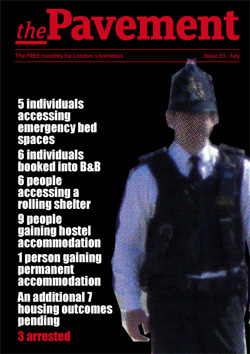
Following Mr Sinclair’s response to The Pavement and other media outlets, Broadway has now published a number of ‘positive outcomes’ they have recorded since taking on their contract in March (worth £790,682 over three years), which includes: Six individuals booked into B&B; five accessing emergency bed spaces; six people accessing a rolling shelter; nine people gaining hostel accommodation; one person gaining permanent accommodation; and an additional seven housing outcomes pending. The Pavement asked Mr Sinclair where these individuals had gone on to. He was unable to answer. “I don’t know the details of the individuals,” he said. “I don’t work with them directly, so all I would say is that those numbers here have improved.” He later added: “I don’t know of any negative follow-ups”. Mr Sinclair added: “These figures aren’t temporary, they’re figures. Some of the outcomes are temporary, as opposed to permanent. What we haven’t done is found all these people permanent accommodation ‚Äì it doesn’t work like that. But they’re not temporary outcomes. They’re outcomes.” He agreed, however, that the statistics represented a ‘snapshot’ of Broadway’s progress to date, adding “there are individual stories behind that”. The statistics supplied by Broadway also referred to a number of “wider social/healthcare outcomes” including: 11 requests for mental health assessments; two referrals into detox; five people reconnected to their local community i.e. supported to return to their country of origin, namely Poland (with a further three individuals supported from Tower Hamlets).

http://www.thepavement.org.uk/story.php?story=518

Homelessness

The law of the streets

cover-34

(The Pavement, 22 May 2009) In recent months, The Pavement has reported on the various enforcement measures being employed to drive homeless people off the streets. But do such tactics actually work and if so, who benefits? These are the questions asked by a report, published last year, which examines the impact of enforcement on ‘street users’ in England. The study, carried out by Sarah Johnsen and Suzanne Fitzpatrick, of the University of York, and published by the Joseph Rowntree Foundation, is primarily concerned with measures used to tackle begging, street drinking and other examples of what is often referred to as “problematic street culture”. However, it also refers to enforcement initiatives used against rough sleepers. The examples of enforcement cited in the report will sadly be familiar to many readers: dispersal orders, the closing down of rough sleeper ‘hot spots’, ‘hot washing’ (wetting the streets to discourage rough sleeping) and arrests under the 1842 Vagrancy Act. The report examines how these interventions have been used and their impact in five key areas – Westminster, Southwark, Birmingham, Leeds and Brighton. From the research carried out, the report concludes that “enforcement is a high-risk strategy, only to be used as a last resort, and never with very vulnerable street users, such as those with mental health problems”. Yet, the report also suggests that many local authorities are increasingly keen to employ these measures in what they see as the “fight against rough sleeping”.

Arrests for sleeping rough

The Pavement recently reported the arrest of Peter Pickles, amongst others, who refused to be ‘moved on’ (issue 33). The incident shocked many people and pointed to a new tough approach by the authorities. This arrest may have been less shocking in Leeds, however, where according to the report homeless people have been arrested under the 1824 Vagrancy Act simply for sleeping rough, a policy carried out, the report claims, in order to “disrupt street lifestyles and address associated ASB”. Arrests as a tactic was not used in any of the other case studies areas. This was, says Dr Johnsen, for a variety of reasons. “The first one being that the police don’t actually want to arrest people who sleep rough. That’s not what they’re about,” she says. “Secondly, there’s a significant fear of public backlash, because while a lot of members of the public – certainly the ones we spoke to – approve of the use of enforcement for people who are begging aggressively or are ‘agro’ street drinkers, most have a very different opinion when it comes to people who are ‘just’ sleeping rough.” “The other reason,” Dr Johnsen explains, “is because it would be of questionable legality in a lot of places, as people can only be arrested if they have refused the offer of ‘freely available’ accommodation. In somewhere like London, you cannot say ‘here’s a bed space available to you right now’ because it just doesn’t happen that way. There’s a real process people have to go through in order to get into a hostel, red tape that has to be negotiated, hoops they have to jump through… It doesn’t happen instantly.” Although the report found instances where arrests acted as a “constructive ‘kick'”, motivating a minority of rough sleepers to look for accommodation, rough sleepers generally just avoided arrest by bedding down further away from the city centre in more hidden places. Most support providers, as well as members of the wider community who were interviewed, were opposed to the arrest of rough sleepers.

Wetting down

The City of London is not the first area to see ‘wetting down’ of rough sleeping spots. In Westminster, the council’s environmental team was instructed to leave pavements of designated areas wet after cleaning the streets to discourage rough sleepers from bedding down at night. The local authority justified this ‘hot washing’ as a deterrent that may, with other measures, encourage rough sleepers to ‘come inside’. All of the rough sleepers spoken to who had been directly affected, like many Pavement readers, merely found alternative, out-of-the-way, places to sleep. Unsurprisingly, hot-washing was strongly criticised by frontline workers. One from Westminster, who was quoted in the report, said: “It’s inhumane… These are some of the most vulnerable people in society… They expect to be knocked by society. It’s the norm for them. But I personally think it’s a pretty appalling way to treat people.”

Dispersal and rough sleeping hot spot closure

Although dispersal orders had been considered in a few case studies, they have not been used to any great extent. While in theory they would help break up large groups of street users, there were concerns that dispersal orders would simply shift street activity to another area. Closing rough sleeping hot spots was thought to be a more effective lever to encourage entrenched street users into services, by both enforcement agents and frontline workers. Used most commonly in central London, as well as Birmingham and elsewhere, one Westminster frontline worker in the report agreed. “If an area is disrupted then it might budge someone in their pattern of going to the same place, at the same time. If they can no longer do that it may make them look at something else,” the worker said. But they emphasised a need for “appropriate interagency coordination” and giving “plenty of warning regarding the date of closure and information about support options available”. They also called for eventual closure to be preceded by intensive outreach work.

Concerns of support providers

Many support providers who were interviewed supported the enforcement measures in principle, provided there was coordination with supportive interventions. However, street outreach workers agreed almost unanimously that enforcement measures caused many rough sleepers to “go underground” and sleep in more hidden places, making them harder to locate and offer support to. Frontline staff also objected to the use of enforcement to combat anything but “genuine” antisocial behaviour. Many support providers were also worried that councils were under pressure to “be seen” to take action against antisocial behaviour, with their clients viewed as “easy targets”.

Tarred with the same brush

Following the reports of harassment of rough sleepers in the City, many people expressed feelings of unease and even anger towards Broadway, the charity contracted by the Corporation of London to carry out homeless outreach work within the Square Mile. “It’s really important that outreach workers aren’t implicated in enforcement actions because they lose their integrity in the eyes of people on the streets,” Dr Johnsen warns. While outreach workers in the report were anxious to distance themselves personally from enforcement, frontline workers wanted a “seat at the table” in antisocial behaviour operational discussions, in order to safeguard the interests of their clients.

The view from the street

Like many service providers, those homeless interviewed were often cynical about the motive behind the enforcement initiatives. “What are the authorities actually after? Is it a vanity, a cosmetic exercise? Do they think we should be out of the way of the visitors?” asked one rough sleeper in Westminster quoted in the report. Not all those interviewed were completely against enforcement tactics for “aggressive” individuals. However, the report notes: “street users on the whole believed that they should be ‘left alone'”.

What’s the future for enforcement?

“There’s [already] been a significant change in perception amongst service providers” said Dr Johnsen. “Since we first began the research people seem to have come to a consensus that enforcement can in some circumstances help some people, but only if appropriate support is effectively integrated, and even then you can’t guarantee that it will work for any one individual.” But, there are still gaps in the provision of some services, she adds. “It’s all very well saying to these people ‘you need to change your way of life, you need to come inside, live in a hostel, you need to get drug or alcohol treatment’ and so on. But if you can’t offer it to them then and there, how justifiable is the threat of dire ramifications for failure to engage?” A major concern for many when reading about these moves will be the loss of free will it marks for readers, as they dictate how and where one should live – instead of relying on an offer of an alternative to life on the street, they are attempts to ban it. Broadway has made much of its statement that “we do not believe it is acceptable that anyone in the 21st century should have to sleep on the streets”. The question perhaps to ask now, some suggest is, ‘acceptable for whom?’. See letters for more on the City story and a legal query.

http://www.thepavement.org.uk/story.php?story=533

Homelessness

Bin-sleeper dumped by rubbish truck

cover-30

(The Pavement, 21 May 2009) A homeless man who sought shelter in a bin in New Hampshire, US, was left with minor injuries after being inadvertently thrown into a rubbish-compacting truck.

Guy Stevens, 41, had been sleeping in the bin for nearly two weeks, but on this particular morning the rubbish was collected early. He managed to jump from the truck, but was left with minor injuries and was later seen limping down the street. Mr Stevens was subsequently taken to jail after police discovered he was wanted on a theft charge dating back to 2005.

This is not the first time such an accident has happened. In Ireland last September, Kevin Fitzpatrick was crushed to death when the industrial wheeled bin he was sleeping in was emptied into a rubbish-collection lorry. His remains were found by workers sorting through waste at a recycling depot outside the city.

The 36-year- old, originally from Derbyshire, was believed by police to have arrived in Limerick just that weekend. At the time, the director of health and social charity Trust reported that a similar tragedy had been averted just weeks earlier, after a driver collecting a skip noticed someone was inside it. Meanwhile in 2006, 44-year-old Robert Baswell sustained injuries including broken legs and ribs, after he found himself in a rubbish truck after falling asleep in a Florida bin.

http://www.thepavement.org.uk/story.php?story=405

Homelessness

Will Homeless Link make homelessness history?

cover-31

(The Pavement, 21 May 2009) In November 2006, Homeless Link, the umbrella organisation for all frontline homeless agencies, published a 10-step guide outlining its pledge to end rough sleeping by 2012 and all homelessness in the UK by 2022. So how’s it going, and why are there two deadlines?

Gill Perkins, head of communications at Homeless Link, told The Pavement they see the 2012 target as “a milestone” on the way to achieving the end of homelessness by 2022. It’s also the intention, according to the guide (Ending homelessness: From vision to action), that the end to rough sleeping will happen “in time for the Olympics”. In terms of funding, money donated is not specifically directed to the campaign or donated on the condition of meeting the goals, says Ms Perkins, but goes towards the general work of Homeless Link’s members in tackling homelessness – “our raison d’etre”. In order to measure progress, the Homeless Link action plan included a ‘roadmap’ to ending homelessness.

The draft Mayor’s Housing strategy does say the mayor will support Homeless Link’s target to end rough sleeping by 2012; and housing minister Iain Wright just this month (April) unveiled the ‘Places of Change’ programme to “help end persistent rough sleeping and reduce rough sleeping to as close to zero as possible” – a commitment and an action plan, though not quite the full pledge to end rough sleeping by 2012. As well as the roadmap, Homeless Link’s action plan laid down 10 key areas covering prevention, support and accommodation that must to be tackled in order to achieve their goal. These included introducing an “effective legal safety net for everyone who is homeless” in line with Scotland’s plan to abolish the “priority need” test by 2012; “emergency interventions” such as family mediation services and rent deposit schemes in every council area; as well as early prevention techniques such as spotting people in vulnerable ‘transition’ periods and assessing and issuing warnings about new government policies which could lead to homelessness. A “doubts and quibbles” page also responded to potential criticisms of their campaign, such as “But homelessness is only part of the problem for many people. You can’t solve everything”. Homeless Link’s answer to that challenge concluded: “Beacons of excellence demonstrate that with careful design and adequate funding, services can help even the most chaotic people to move towards a better life.”

Ten years ago Labour pledged to reduce rough sleeping to “as close to zero as possible” and cut the number of those sleeping on the streets by two-thirds before 2002. They claim to have achieved this target; however, this has been challenged by a number of homeless groups – as well as many of our readers – who say the figures do not represent the reality on the streets or take into account the “hidden homeless” drifting between hostels and the streets.

This April, the Department for Communities and Local Government published a discussion paper entitled Rough sleeping 10 years on: From the streets to independent living and opportunity, and has said it intends to publish an updated rough sleeping strategy later this year to set out government policy for the next three years. The recent discussion paper briefly outlines what this strategy will likely include before listing “who’s on the streets”. According to the paper, the answer is “a continuing flow of ‘new’ rough sleepers”, “migrants without recourse to public funds” and “entrenched rough sleepers resistant to service provision”.

Homelessness has undoubtedly been back on the agenda in recent times; with MEPs signing a pledge to end rough sleeping by 2015, London mayoral candidates backing Homeless Link’s goal and the Iain Wright’s recent pledge. Ms Perkins notes “a renewed focus from the government on this major social issue”, although she agrees that “Obviously government has to support our campaign to get all the relevant agencies working together – no one group can do it alone”. This focus on group effort means involving the opposition party and working with people like shadow housing minister Grant Shapps, as well as central government, local authorities, related organisations and the departments of health and criminal justice.

The government’s part in ending homelessness, according to Homeless Link’s plan, ranges from statutory reforms such as ending the “16-hour rule” and amending the Homelessness Act, to instructing policy change in other areas, whether directing NHS trusts to never discharge homeless people from hospitals onto the streets or halving the number of evictions.

So does Homeless Link think they can succeed to meet its goals? “Yes”, says Ms Perkins. “As long as everyone comes to the party… It’s an ambitious goal, but worthwhile”.

http://www.thepavement.org.uk/story.php?story=423

Travel

Time travel

henley

(Escape, Jan/April 2009) Carinya Sharples steps into the past at Acton Scott in the South Shropshire hills, discovering the charms of a unique Victorian holiday cottage, the subject of a new BBC television series

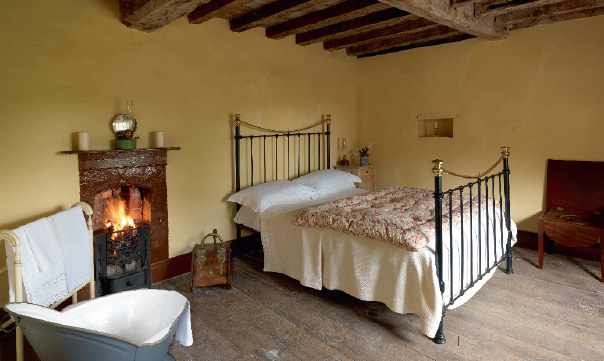
The closest most of us come to time travel is jetting over time zones on holiday. But amid the rolling green hills of South Shropshire, visitors can turn back time and live like a Victorian farm labourer. Forget widescreen TVs, microwaves and radiators; in fact, forget electricity and plumbing – guests at Henley Cottage cook and heat their water on a Victorian coal-fired kitchen range, store food in a pantry and take hip baths by a roaring fire. This unique project is the work of Rupert Acton, who manages the estate, and his wife, Louise.

Rupert says: “Henley Cottage aims to appeal to those who would like an adventure. If you are searching for a simpler way of life – water hand-pumped from a well instead of turning on a tap and light from candles and oil lamps as opposed to flicking a switch – then this is for you.”

Stepping back in time

Set in the picturesque landscape of Acton Scott, Henley Cottage is one of a pair of 19th-century farm labourers’ cottages. Because it was never modernised and then left abandoned in the 1950s, it remains a rare example of authentic Victorian life – walk through the aged front door, and it’s like stepping back 150 years. It has its original quarry tiles, worn oak floor boards and sturdy beamed ceilings and, at the heart of the cottage, the coal-fired range. As well as being used for cooking the meals, the range is a great source of heat and all the rooms are surprisingly toasty. Oil lamps, sitting in sconces on the walls, provide lighting, and upstairs the two bedrooms (one double, one twin, and an extra single, if needed) have wrought-iron bedsteads and traditional linen sheets and are warmed by open fires in a coal grate or wood-burning stove.

The attention to detail is fantastic and includes period furnishings, a jug-and-bowl set for washing and even a commode should you get caught short in the night. On arrival, guests receive instructions on how to use all the cottage’s domestic bygones. In fact, the only compromise to authenticity is the addition of a modern toilet and shower, tucked out of sight in the garden next to the original earth closet loo.

Available from April, Henley Cottage is about to find fame in a prime time BBC2 television series, Victorian Farm, which was filmed at Acton Scott and is due to be screened from January.

Around the houses

As well as Henley Cottage, Acton Scott currently offers two other properties: Henley Farmhouse (ref: RJJ3) and The Shooting Lodge (ref: RNP). The Actons originally let out only the 18th-century stone-walled section of the farmhouse, before deciding to extend and renovate the 16th-century timber framed and brick side. The property now offers 10 bedrooms and nine bathrooms, most of which are en suite. “Already we’re getting repeat bookings,” says Rupert. “It’s so satisfying, especially as it was such a risk to take.”

Rupert’s passion for careful restoration is obvious as we tour the estate and he is supported by a team of artisan craftsmen. “I believe strongly in the need to keep alive traditional skills, conserve historic buildings and preserve the natural landscape,” explains Rupert. “These are the principles that I have been brought up with. It can be expensive and it can be time consuming, but the results are worth it.”

The Shooting Lodge was carefully restored and refurbished eight years ago. Today, guests come to enjoy the rural isolation with all modcons and make the most of the entertaining opportunities provided by the banqueting room (a former cow shed with a large open fireplace), which can seat up to 18.

Set in a designated Area of Outstanding Natural Beauty, in the South Shropshire hills, the Acton Scott estate has been owned by the Acton family for over 800 years. Its 1200 acres hold a number of small farmsteads, stone and timber-framed cottages, ancient woodland and open pasture. At its centre is Acton Scott Hall, a Grade II* listed, Elizabethan mansion of 1580, that is the Acton family’s residence.

The local area has twice received the royal seal of approval. Prince Rupert, King Charles I’s nephew, is believed to have stayed at Acton Scott Hall during a skirmish in the Civil War and HM Queen Elizabeth II spent a night on the Royal Train stationed on the railway line at Henley, during a visit to the area, shortly after her coronation. The historical significance does not end there – an archaeological dig of Acton Scott’s Roman villa, an Ancient Scheduled Monument, is currently in progress nearby.

At home on the farm

Acton Scott is also the location for the Historic Working Farm, a favourite visitor attraction for families. The original concept of keeping the farming practices of 1900 alive was conceived by Rupert’s father, Tom Acton, in the 1970s. Open to the public from April to October, it provides a fascinating insight into life on a working 19th-century country estate.

Traditional breeds of animals are stocked while the surrounding land is worked with heavy horses. Milking by hand and butter making are demonstrated daily in the dairy and there are weekly visits from the Wheelwright, Farrier and Blacksmith. Young animals, such as the Tamworth piglets and the farmyard poultry, are hits with children.

Getting involved

The Historic Working Farm has a souvenir shop, café and educational centre and children can lose themselves in the willow maze or dress up in 19th-century clothing for a photo. Acton Scott is also starting courses in rural skills, such as animal husbandry and hedge laying, using the facilities of the Historic Working Farm and the estate at large. Participants can stay at any one of Acton Scott’s holiday houses or book Henley Cottage. “Acton Scott is uniquely placed to offer the experience of learning about 19th century country life while also being able to live as a Victorian might have done, by staying at Henley Cottage,” says Rupert.

Visitors to Acton Scott can ramble over the estate’s green hills, parkland and woods, and there are walks suitable for all ages and abilities. The historic market towns of Ludlow and Shrewsbury are a short drive away. As the properties are self-catering, guests can stock up on provisions in nearby Church Stretton and Craven Arms while the local Strefford Hall Farm Shop delivers meat and seasonal supplies.

It may seem like the Actons have more than enough on their plate, but they already have a new project in the pipeline – turning The Old Smithy, once used by blacksmiths and still in possession of an old forge, into new holiday accommodation. Time may have stood still on the Acton Scott Estate, but there’s no stopping this pair.

Time travel PDF

London culture

Lewisham Life: Selection of articles

Articles on local cultural happenings, courses and training opportunities for Lewisham Life, the magazine for Lewisham Council.

Work Experience: Are you experienced? (PDF)

LewishamLife_work_experience-1

Christmas Around The World (PDF)

LewLife_Dec_Jan09_WorldXmas

Best In The Business

LewLife_Jul_Aug08_BusLife

Film in Lewisham: Screen Secrets

LewLife_Jul_Aug08_Film

VoxPop: Do you make use of your library?

LewLife_Jul_Aug08_VoxPop

Get ahead in business

LL_Feb08_Bussiness

Caring for the carers

LL_June08_Carers

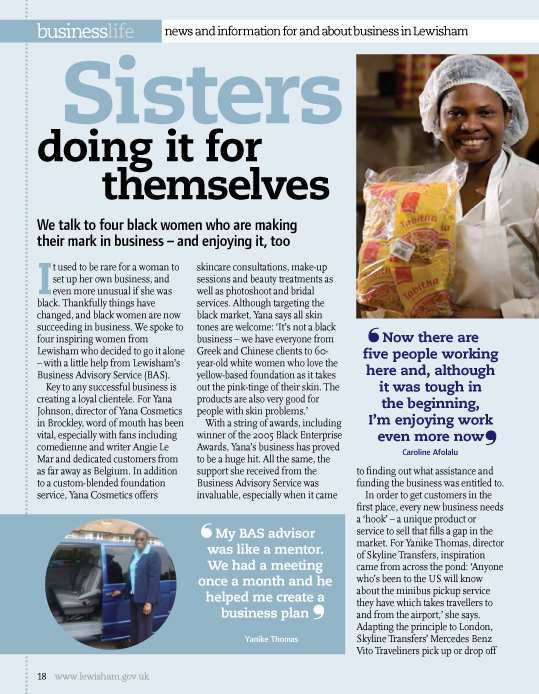
Sisters doing it for themselves

LewishamLife_black_business_women-1

If the cup fits…

LewishamLife_bra_fitting

Building for the future

LewishamLife_construction_training

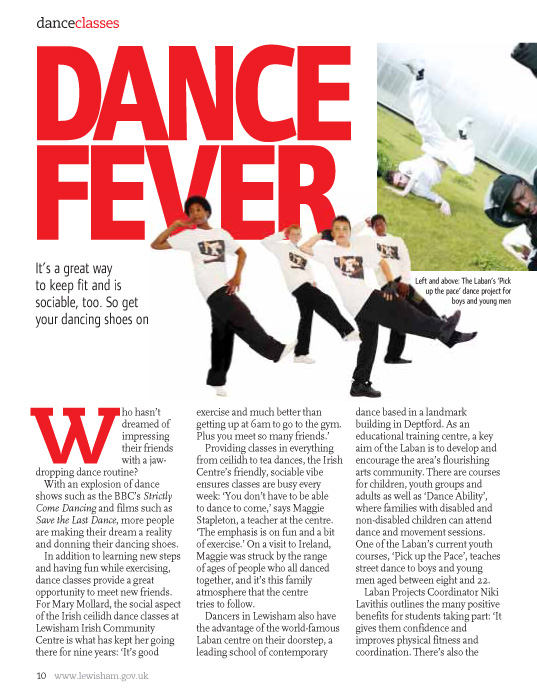
Dance Fever

LewishamLife_danceclasses-1

VoxPops: Will the extension of the East London line benefit you?

LewishamLife_eastlondonline_voxpops

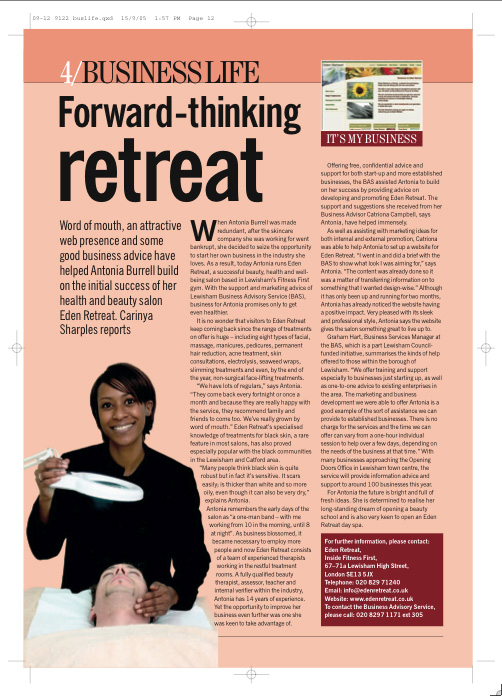
Forward-thinking Retreat

LewishamLife_Eden_retreat_July2005 copy

Anti-tag team

business-life-4

Art in Lewisham

LewishamLife_Jul_Aug09_Art_In_Lewisham

Balancing the books

LewishamLife_kirkdale_bookshop

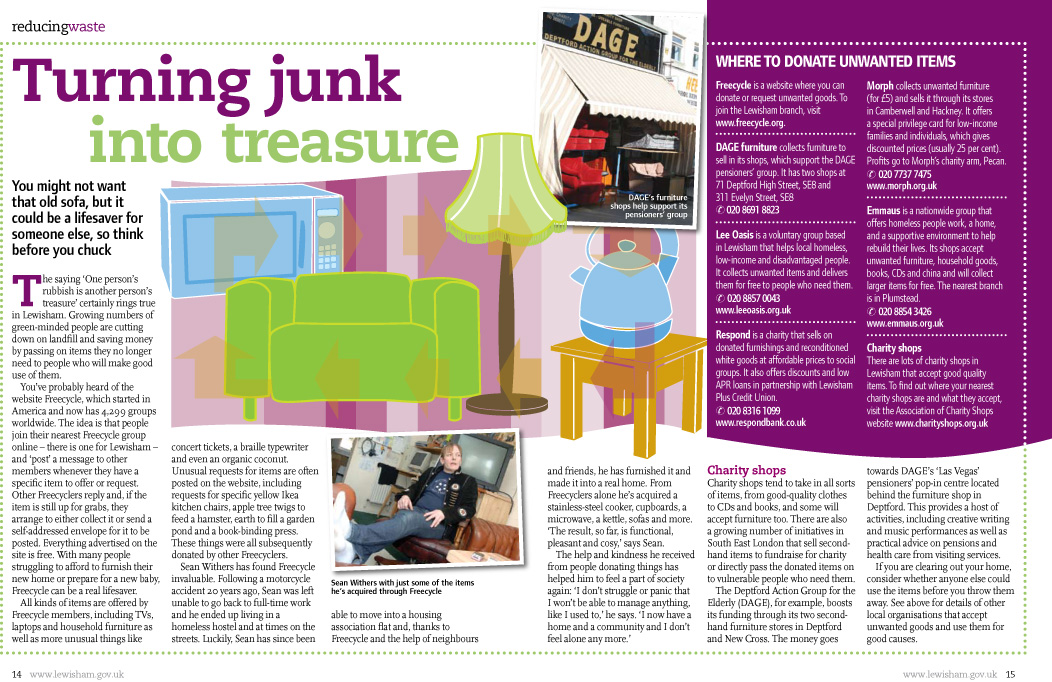
Turning junk into treasure

LewishamLife_May08_Reuse

Getting back to work

LewishamLife_openingdoors

We are the champions

LewishamLife_recycle_competition

Care and committment

LewishamLife_residential_home

Rocklands

LewishamLife_Sept08_Rocklands

A Safe Haven

LewishamLife_thehaven

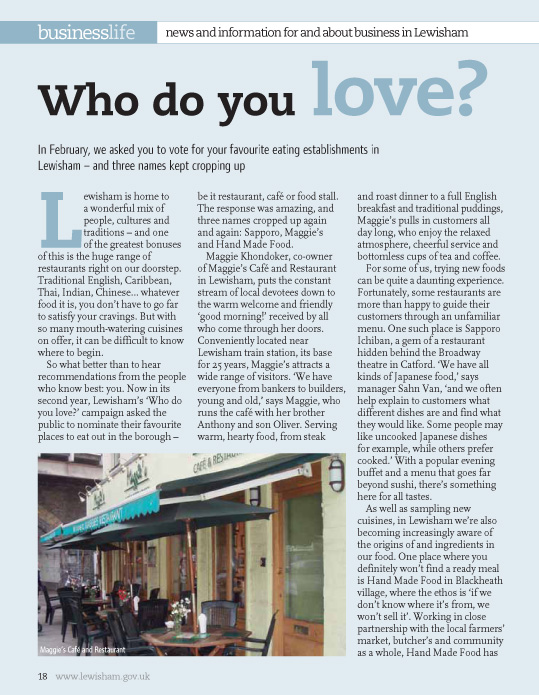
Who do you love?

LewishamLife_whodoyoulove-1

Travel

Valencia Walk

valencia

(Escape, July/September 2008) Spain’s third largest city has seen an exciting revival in recent years. Our Valencia city walk will guide you through the colourful streets between the two towers of Torres de Serranos and Torres de Quart

Whether you’re an avid walker or prefer a gentle amble, a stroll through Valencia is a great way to soak up the city’s vibrant atmosphere. Our Valencia walk is a fun way to see the sights and you can do as much, or as
little, of it as you fancy. Allowing ample time for sightseeing, and a spot of lunch this walk should take you around half a day.

Along the Jardines del Turia (A) near Puente de Serranos (B) in the Casco Antiguo North, is your starting point – the 14th century Torres de Serranos (1), thought to be the largest Gothic city gateway in Europe. Follow the gardens to your right before turning into Calle Muro de Santa Ana (C), passing Palacio de Benicarló, the seat
of the Valencian Parliament, on your left. The road turns into Calle Navellos, where you’ll find the Plaza de la Virgen, home to La Basílica Nuestra Señora de los Desamparados (2). People flock here to see the statue of the
Virgin, known affectionately as la cheperudeta (‘the hunchback’).

By the plaza is the Catedral (3), founded in the 13th century on the site of the old main mosque – you can still find the Moorish influence in some local architecture and food. Walk ahead to the Plaza de la Reina (D) for a rest in the garden or head to the southwest corner for a drink of horchata at Horchateria El Siglo (5) on Plaza Santa Catalina. Made from tiger nuts, horchata is served chilled, usually with a cake called fartons.

From the plaza, follow Calle Paz before turning right towards the decadent 16th-century Palacio del Marqués de
Dos Aguas (6). Heading westwards across Calle San Vicente Mártir to Avenida Maria Cristina (E) will take you to the huge iron structure of Mercado Central (7) – a Modernist creation of 1928 and one of Europe’s largest covered markets. Pick up some ham, cheese, olives… whatever catches your eye (and nose). Just don’t forget to look up to see the incredible mosaics, stained glass and glass dome above you.

Past the market on your right is the 15-16th-century Gothicstyle La Lonja (8), a former silk exchange and now UNESCO World Heritage site. Twisting pillars that look like spun sugar are worth a stop inside, while rude gargoyles can be spotted on the outside walls. For lunch, try the Tasca Angel (9), near La Lonja where you just
shout your order from outside.Fully refreshed, it’s time to finish your walk. Stroll up Calle Bolserías until you reach Plaza Tossai (F), turn left onto Calle Quart and there your walk ends at the Torres de Quart (10).

Valencia Walk PDF

Travel

A Real Barnstormer

barn

(Escape, April/June 2009) Laura and Steve Martin have pulled off an exceptional conversion project at Biddenden Green Farm. Carinya Sharples travels to Kent to marvel at their grand re-designs

It’s not every day that you wake up in a four-poster bed in the turret of an old oast house – unless you’re at Biddenden Green Farm (Property reference: PBBY) in Kent that is, where the distinctive curved wall, exposed brickwork and tall, conical ceiling have been given a new lease of life as an unusual rural retreat.

The transformation from hop-drying farm building to impressive barn conversion began when Laura and Steve Martin decided to move away from London with their two children. Following the train line from Orpington, where they lived at the time, they found a quirky house in the Kent village of Smarden. The only hitch was that the house came as part of a larger package and so the Martin family found themselves taking on a dilapidated 16th-century barn and former oast house to boot. “I wasn’t even sure how I’d feel living in the countryside,” admits Laura, “but houses speak to me – it’s a feeling rather than a logical decision.”

Thankfully the gamble has paid off and today, four years on, the renovated barn and oast guest houses of Lewd Lane have a steady stream of visitors, won over by the combination of tranquil surroundings, homely rooms and quirky, original fixtures. The couple’s determination to keep as many of the original features as possible has proved central to their success. “When you’re doing a conversion like this,” explains Laura, “you’re a custodian. We want to leave our mark without taking away anyone else’s.”

Treading carefully

The Grade-II listing of the Martins’ home and the thatched barn (under which the oast also falls) gave the pair another reason to tread especially carefully. Yet with the buildings in such disrepair, this was no easy task. The barn may have been in active use on the farm just 70 years ago, but it was derelict for many years and the wood was starting to decay. So, as well as enlisting the help of English Heritage, the Martins recruited a specialist timber expert. “He was a great help and keen to preserve as much of the original timber as possible,” says Laura. “When he first came to the barn he was like a kid in a toyshop!”

Willow hurdles

Thanks to this motto of “repair not replace”, the two buildings are full of fascinating historic insights. In the oak-framed barn, built between 1590 and 1610, the original threshing bays are still in place and Laura points out the faint outlines of several circles, carved into the wood. Far from being accidental scratches, they are old ‘witching’ or ‘ritual’ marks, used to protect the superstitious occupants from what the handy visitor’s guide calls the ‘plague and pestilence of witches’.

Other elements of the barn’s previous existence are less noticeable – and probably just as well since what is now the smart kitchen area was once used to make willow hurdles for sheep fields; while the spacious living area stored hay and the second bedroom was a piggery. Today, the invasion of farmyard life is restricted to a complimentary basket of fresh, free-range eggs from the family’s own chickens, while the rooms are filled with sturdy, dark wood furnishings rather than troughs.

Timeless decor

Designing the interiors and sourcing the furniture was Laura’s favourite part of the restoration. “Some pieces came from abroad, the internet, even eBay – but what I loved most of all was going to local antique auctions, like the one in Cranbrook.” The resulting blend of original beams and antique furniture with dramatic fittings and cosy sofas works well, creating a feel that’s homely yet historic – the four-poster beds, dark wood chests and traditional low ceilings adding a real sense of timelessness.

The barn’s spacious living area, sizeable tables, three double rooms (two ensuite), twin room and mezzanine floor (with sofa bed and games) have made it particularly popular among those planning large family get-togethers, friends’ holidays and hen parties. And although history is important to the design and mood of both the barn and oast, Laura is aware of the importance of comfort and quality modern conveniences, especially for self-catered accommodation: “Before moving to Kent, we used to go away on holiday every year to places like this. So we knew the good and bad points and remembered the crucial things to get right, like a shower that doesn’t just trickle on your head. Good beds and kitchen equipment are also very important.”

Drying the hops

The Oast House is a smaller, cosier affair, with a living room at the bottom of the curved tower where once a fire would have been lit to dry out the hops above, the smoke escaping through the roof vents. These days, under-floor heating keeps the place toasty. Above, a four-poster bed sits in the rounded main bedroom, and across the sunlit landing are another two further bedrooms. Back downstairs, the walls of the warm kitchen are dotted with old black and white photos of a farmer in front of the working oast, diagrams of the process of hop drying and other sketches of farm life.

Even though the Oast House has only been up and running for two years – and The Thatched Barn open since just last September – Laura and Steve have already had a number of returning guests and welcomed visitors from as far afield as the US, Israel, Germany and Singapore. The visitors’ books in the barn and oast house are full of praise for an “amazing building, lovely homely feel”. Even local people don’t seem to be able to resist the buildings’ allure. “We’ve had people from Bluebell Hill and Sittingbourne, which are only half an hour away,” says Laura, “But then you never explore what’s on your own doorstep.”

Frogs, ducks and lily pads

And there’s plenty to explore – most guests take advantage of the many attractions to be found across Kent, whether going on a day trip to Leeds Castle, Canterbury Cathedral or Camber Sands beach, walking the wartime tunnels of Dover Castle or Sissinghurst Castle Gardens, or taking the kids to the Rare Breeds Centre or Kent & East Sussex Steam Railway. And with Paris less than two hours away via Eurostar from nearby Ashford International, it’s easy to pop over the Channel for the day to see the sights and stock up on French delicacies. Though with a pond full of frogs, ducks and picturesque lily pads, the chirpy twitter of blackbirds, sparrows and jackdaws, not to mention the impressive sight of hunting horses chomping on grass in the next field, some guests don’t feel the need to venture far from Biddenden Green Farm. And when the sun is shining, there’s nothing better than a stroll through the local fields followed by a hearty lunch at one of Smarden’s three
welcoming pubs.

So after four busy years – and a lot of ironing – has Laura been put off life in the countryside? “I wouldn’t go back to London for anything!”

Article PDF

Misc

The trash khan of history

khan

(Spiked Online, 4 July 2008) ‘Do not scorn a weak cub; he may become a brutal tiger.’ The wise old Mongol saying, which introduces this portrait of the thirteenth-century Mongol emperor Genghis Khan, may be a genuine, if hackneyed, attempt on the part of Russian director Sergei Bodrov to bring a sense of authenticity to the film; it’s just a shame the rest of the film is so historically disingenuous.

Faced at the age of nine with the death of his father – who had been the Khan, that is, the leader of his tribe – Temudjin (aka Genghis Khan – no, they don’t explain the name change) is cruelly cast out by the same people who once served his father. Temudjin’s subsequent meteoric rise from slave to ruler of all Mongols and commander of the largest contiguous empire in history – four times the size of Alexander the Great’s and twice that of Rome – is an incredible story, yet it’s tacked on as an afterthought, like those ‘where did they end up?’ credits at the end of TV documentaries about children’s hospitals or troubled teens (1). Admittedly, this is just the first in a trilogy of films about the life of Genghis Khan. Yet whether anyone will want to sit through the next two after this slow start remains to be seen.

The film begins strongly, depicting Temudjin when he was a child (played with conviction by the young Odnyam Odsuren). Self-assured and fearless, the composed expression with which he greets every danger or obstacle is what we expect of someone deemed worthy of yet another film some 800 years later. It’s just that the moment of glory we’re waiting for never quite comes.

The film does portray a number of key battles in the rise of Temudjin, complete with spraying blood, sharp swords and more stomach slicing than your average episode of 10 Years Younger. Unfortunately, Tadanobu Asano, who plays the older Temudjin, fails to fully capture the ambition, charisma and brilliance that inspired so many men to follow Genghis Khan into battle. And because this is only the first instalment of the trilogy, the final showdown is not the ruthless and triumphant seizure of territory across Asia – including China, Russia, Persia, the Middle East and Eastern Europe – but a half-hearted fight between Temudjin and his ‘blood’ brother Jamukha.

With his quirky neck-cracking habit, tendency to sing after a few drinks and a mohawk where the other men have long plaits, Jamukha (played by Honglei Sun) brings a touch of ‘character’ comedy to the proceedings – although you do half expect him to roll his eyes mock-despairingly at the camera, don a pair of sunglasses and start using the silver jewellery piece on his ear to make hands-free calls to one of his ladies. Although the two men’s love/hate relationship or rather love/troubled-but-with-mutual-respect relationship is a welcome break from Temudjin’s dull worthiness, it shouldn’t take up nearly all of the script. This is Mongol warfare à la Oprah.

The women take more of a back seat in the film, as they probably would have done in Mongol life at the time. So, although Temudjin’s wife Borte (Khulan Chuluun) is feisty and sticks by her husband throughout, she still spends most of the film either watching him leave or waiting for him to return. The tension of ‘will they ever see each other again?’ is overused to the point where I couldn’t have cared one way or the other.

Besides, Genghis the romantic hero? Hardly. He may have loved his wife and rescued her after she was kidnapped, but he’s also said to have taken on a number of other wives. Moreover, according to recent research, through harems, concubines, not to mention raping captured women, Ghengis’ demographic contribution was such that nearly eight per cent of the men who now live in what was the Mongol empire share near-identical Y chromosomes (2). His descendents are even thought to stretch to our Royal family, Iranian royalty and the family of Dracula (3). Presumably true love gets higher points with the film focus groups.

Such a varnished portrait is problematic. The film blurb promises to deliver the untold story of Genghis Khan ‘based on leading scholarly accounts and written by Bodrov and Arif Aliyev’ yet it seems that they’ve chosen to pick and choose the most sentimental parts from the academic research and leave out the rest (4).
One spectacular element to the film – and perhaps the reason why it was nominated for an Oscar in the 2007 Best Foreign Language Film of the Year category – is the scenery. Like an extended episode of BBC2’s Wild China, the camera (and horses) gallop across endless deserts and steppes, over lightning-lit rocks and through lush green grasses and forests. Filmed around remote steppes and forests in China, Mongolia and Kazakhstan, which was once part of the Mongol empire, it stays true to Genghis Khan’s roots.

Despite being only two hours long, this biopic manages to feel both much longer and not long enough, with many unanswered questions, unexplained escapes and loose threads. It would have been far better if Bodrov had taken a lead from Genghis himself and brutally chopped the three-part script to make one fast-paced film with an engaging and fluid narrative. In some ways the film is similar to Ridley Scott’s fantastic Gladiator – also about the fall and rise of a man from leader to slave to leader again, and the love he has for his family.

The thing is, Gladiator makes no real claims at historical authenticity. And this is Mongol’s problem. For it would have worked far better as fiction than half-baked history, especially if you too struggle to accept the perfectly timed good fortune frequently bestowed on Temudjin by Tengri, the God of the Blue Sky, in times of danger. Since when is that a fair fight? What next? Moses rustling up another sea-parting for God-fearing Nelson in Battle of Trafalgar: the Movie?

http://www.spiked-online.com/site/article/5428/

Homelessness

Mayoral candidates: Boris Johnson interview

30-johnson

(The Pavement, 5 April 2008) He has been editor of The Spectator, MP and Shadow Minister of Higher Education, but to most people Boris Johnson is that Eton-educated Tory with the shock of blonde hair who goes on Have I got News For You? and makes ill-advised comments about Liverpool. Yet it appears someone has had a word in his ear and suggested that to have a serious pop at winning the crown of London mayor, it might be time to lose the jester’s hat. So there were friendly smiles but no buffoonish jokes as Boris strode into the sparsely decorated County Hall room, and stood on the map of London stuck presidential seal-like on the floor and emblazoned with his campaign slogan ‘Back Boris’.

When handed a copy of The Pavement, Mr Johnson immediately remembered a much earlier brush with homelessness. “Actually one of the first things I ever gave away money to was Shelter, at primary school…”

Thankfully the mayor’s budget holds more money than the average piggy bank. So how would Mr Johnson spend these funds to help homeless people in London? “The most important thing is to help homeless people get the accommodation they need,” he says. “That is why I want to get people into some of the 84,000 empty homes across London. The number of empty homes has risen considerably in the last few years, and the number of people on housing waiting lists has gone up 68 per cent. There is an obvious solution there, it seems to me”.

One of the first things Boris did in his campaign was to visit St Mungo’s in Chelsea. “We talked to a wonderful guy, Edwin, and heard his life story and how homelessness can overtake anybody,” says Mr Johnson. “Growing up, he was a well-off guy, then suddenly he hit the buffers, everything went wrong, and his personal life broke down. These things are often accompanied by some breakdown in emotional, personal lives as well, and suddenly there just seems no way out”.

As mayor, Mr Johnson says he would encourage charities like St Mungo’s, although he warns that while hostels are part of the solution, “in the long run we need to get people off waiting lists and into accommodation. That is why I think homeless people should vote for me if they could vote.” I explain that in fact homeless people can vote, simply by making a declaration of local connection. “Oh, can they? Good!”

The GLA Act, passed in October 2007, gives the mayor of London responsibility for the capital’s housing strategy and investment as well as the power to decide how London’s public money for affordable housing will be spent. And with the newspapers full of credit crunches, repossessions and soaring mortgage interest rates, it is no wonder housing is a big part of the Back Boris campaign.

Like Ken Livingstone, Mr Johnson has pledged 50,000 new affordable homes in 2008-11 while also calling for protection of London’s green belt and an emphasis on quality as well as quantity. “Affordable must not mean second-best,” he says. “It must not mean high-rise council flats. It must not mean being cramped and overcrowded”. Despite these exacting standards, Boris reveals he is not averse to more ‘creative’ ideas. “There are lots of tricks that the current mayor is missing, like Hidden Homes.”

This is a scheme that has been run by Wandsworth Council since 2003. Mr Johnson applauds the council for doing a “fantastic job” finding homes in overlooked places. “They lifted the lid of an underground car park and turned it into lots of wonderful homes. There are 10,000 homes you could find like that”, he says, before mentioning “suburban tube stations” as another possible option.

For Mr Johnson, housing and homelessness are “two sides of the same coin”: Homelessness, he says is “a huge problem and you are dealing with people who have fallen through the housing net who feel completely hopeless and that there’s no one looking out for them”.

So does he back Homeless Link’s goal to eradicate rough sleeping by 2012? Or does he think this is Mr Livingstone being influenced by the upcoming Olympics in London? “I don’t know if it is linked to the Olympics,” he replies cautiously. “I certainly think it is sad there are so many rough sleepers and they deserve help and support.” He supports the target, but is wary of looking underhand. “We are not just doing it to make London look tidy for the Olympics,” he stresses. “We are doing it because we want to help people in their lives.”

However, Mr Johnson admits he is less up to speed with the issues over banning soup runs, a campaign recently put forward by Westminster Council. The scheme failed to obtain approval, and although Mr Johnson is “familiar with the controversy”, he wavers over who would get his support. “There seem to be two sides to the argument,” he says. “What John Bird has to say, I listen to with great respect and interest – I do not want to support measures that will unnecessarily keep people on the street. On the other hand, I do not want to snatch soup from the lips of hungry people. It would be pretty heartless to withhold it.” So which would it be? “We clearly need to work out what the best way forward there is. We will need to see how the Westminster experiment works,” he says.

He does, however, confirm that he is keen to support the voluntary sector and get money to worthy causes around London, like St Mungo’s. “I am also going to be setting up a Mayor’s Fund, which will be a big vehicle for getting money from the wealth-creating sector to the voluntary sector”. This will, he hopes, be a great thing for young people and the homeless, too.

Another hot topic surrounding homelessness in London is the increasing number of homeless people from particularly Central and Eastern Europe. What does Boris think of the situation many ‘A8s’ or A2 nationals (those from recent EU member states Romania and Bulgaria) find themselves in – powerless to claim benefits for a year, unable to find a job and left to fend for themselves on the streets?

“Obviously I hugely welcome the contribution that Polish immigrants have made, and people from all over the A8 countries; they are doing a fantastic job in London and they deserve support,” Mr Johnson enthuses. “But it would be a it would be a tragedy if people were coming to London and ending up in poverty and destitution, unable to get back to family who can look after them”. He cites his recent visit to the POSK centre in Hammersmith and his concern about the “growing” homelessness, despite networks and groups which support people within the Polish community.

Mr Johnson adds that he has a particular interest in the level of assistance provided for the number of ex-service men and women on the streets. Recent statistics suggest that one in four rough sleepers in London have a military background. Mr Johnson has pledged to introduce free bus travel for returning veterans of current wars. “I think it is about time that we did something for lots of people that are coming back from wars, which we may or may not agree with, and finding that the country they are fighting for is very cold and unwelcoming,” he says. “I think it would be a good thing to show some recognition of the sacrifices they have made.” He cannot resist adding: “I am pleased to see the mayor has now imitated us… he has had eight years to think of this, but has decided to do it as well – and about time too.”

During the interview he asks: “What’s your estimated of the number of rough sleepers in London?” and, when looking through The Pavement, “What’s the Soup Run Forum?” Perhaps Mr Johnson is keen to engage and learn more about the homeless community and the latest issues. He comments how every morning he cycles past the queue of people waiting outside St Martin’s in the Fields and wonders “what have they been doing all night?”

As we wind up the interview, The Pavement photographer asks Mr Johnson to pose with a copy of the magazine, which he does readily, flicking through the pages at the same time. He soon comes across the photo on the foot care page and with a cry of revulsion (“Ooh… aah… nasty!”), the serious politician demeanour slips and for a moment Mr Johnson is once again that young boy who did his bit for Shelter.

http://www.thepavement.org.uk/story.php?story=394

Misc

Cafe culture costs too much to bear

birmingham_post_comment

(Birmingham Post, 28 May 2004) Birmingham may have lost out on the title of European Capital of Culture but trying to make up for this by imposing the al fresco chic of Paris on Broad Street is not only unrealistic but also untrue to the lively, exciting nightlife that is already on offer.

Brindleyplace, The Arcadian and The Mailbox at present cater for the more affluent business sector of the community. If we are to make Broad Street a basic extension of these spots then surely we can expect the same sense of exclusivity and the same high prices?

This suggestion totally ignores the majority of night-time revellers who do not go out to cause trouble, as many seem to assume, but instead to have a fun evening out and not break the bank while doing so.

I understand and sympathise with the arguments made about Broad Street’s rowdy, drunken and troublesome image. However, I do not see how something that has become so ingrained in our society’s culture, namely drinking, can be legislated out of existence.

Problems of excessive drinking, criminal activity and anti-social behaviour are to be found in every city all over the country. It just so happens that with the majority of Birmingham’s central bars, pubs and clubs clustered on one street, any trouble is bound to be more concentrated.

Banning drinks promotions or seating people at elegant cafe tables is not the answer. Binge drinking and any of its side effects will continue, just at greater expense to the already debt-stricken students and less well-off sections of society.

Broad Street’s current difficulties will not be solved but instead simply moved and exacerbated somewhere else. What will be the high-handed consensus when this happens? That there is to be a total ban on drinking and that continental cappuccinos are the future?

It seems that the group behind the ‘cafe culture’ proposals is trying to butter up business visitors to the city while making sweeping generalisations about other less affluent members of the Birmingham community and ignoring their needs and wishes.

Not everyone likes, or can afford, to spend a night at the theatre or an expensive restaurant. Many people, including some of the so-called ‘suits’, prefer a night dancing in a club, unwinding with a few drinks, or meeting new people in a busy, sociable environment.

Birmingham is a hugely popular city and the diverse entertainments on offer is what attracts the range of people who choose to party here – whether that be the groups of friends who visit to celebrate a stag or hen night, the students from Birmingham’s three universities inevitably looking for a cheap night out, or the majority of Birmingham’s working residents looking to let down their hair at the weekend.

A night out on Broad Street, for most people I know, is spoiled right at the end by having to wait for hours for a taxi or by the few individuals who cannot handle their drink or who are looking for trouble. Zero tolerance on such people, as has been suggested, sounds more like the way to go forward.

Why should everyone be punished for the thoughtless actions of a few troublemakers? Improvement, not complete redevelopment, is the answer. We should clean up, not be cleaned out.

http://icbirmingham.icnetwork.co.uk/0100news/0100localnews/archive/tm_objectid=14282878&method=full&siteid=50002&headline=cafe-culture-costs-too-much-to-bear-name_page.html